
Quickstart#
Mesh a 20 × 20 square with a 12 × 12 block of quadrilaterals in the middle, check the report and save the mesh.
import meshkit
import numpy as np

request = {
    "points": np.array([[0., 0.], [20., 0.], [20., 20.], [0., 20.]]),
    "paths": [{"kind": "outer", "vertices": [0, 1, 2, 3], "closed": True}],
    "options": {"cells": "mixed", "maximum_size": 4., "minimum_target": .5,
                "adjacent_ratio": 3., "minimum_angle_degrees": 20.},
    "quad_regions": [{"ring": [[4., 4.], [16., 4.], [16., 16.], [4., 16.]],
                      "cells": "required_quads", "spacing": 3.}],
}

result = meshkit.run(request, progress=lambda event: print(event["stage"], event["percent"]))
assert result.report["complete"], result.report

xyz = np.asarray(result.vertices)       # float64 (N, 3), read-only, shares native storage
cells = np.asarray(result.cells)        # uint32 (M, 4), counter-clockwise
corners = np.asarray(result.cell_types) # 3 or 4; a triangle's fourth slot is unused

report = meshkit.write("square.mkb", result)
assert report["complete"], report
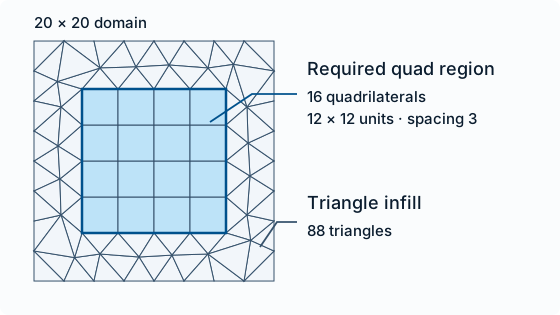
Mesh produced by the request above. The blue patch follows the required quadrilateral region. Each cell outline comes from the returned vertex indices.#
What happened:
pointsare the source vertices; theouterpath joins them into the domain. See Requests and options.cells="mixed"plans mapped quadrilateral patches (here the required one inquad_regions) and fills the rest with triangles no larger than 4 units.meshkit.run()starts a native job, callsprogresson this thread with each batch of events, and returns aMeshResult. See Results and reports.meshkit.write()publishes the file atomically and refuses to replace an existing file unlessoptions={"overwrite": True}. See Reading and writing files.
Running a job without waiting#
meshkit.start() returns a Job immediately:
import time

job = meshkit.start(request)
while not job.done:
    for event in job.poll():
        print(event["message"])
    time.sleep(0.1)          # or do other work
result = job.result()       # or job.result(5.0) to wait at most five seconds
The timeout is positional: job.result(timeout_seconds=5) raises
TypeError.
job.cancel() stops a running job; it then reports status cancelled.